

TPE for Brain Health & Cognitive Function
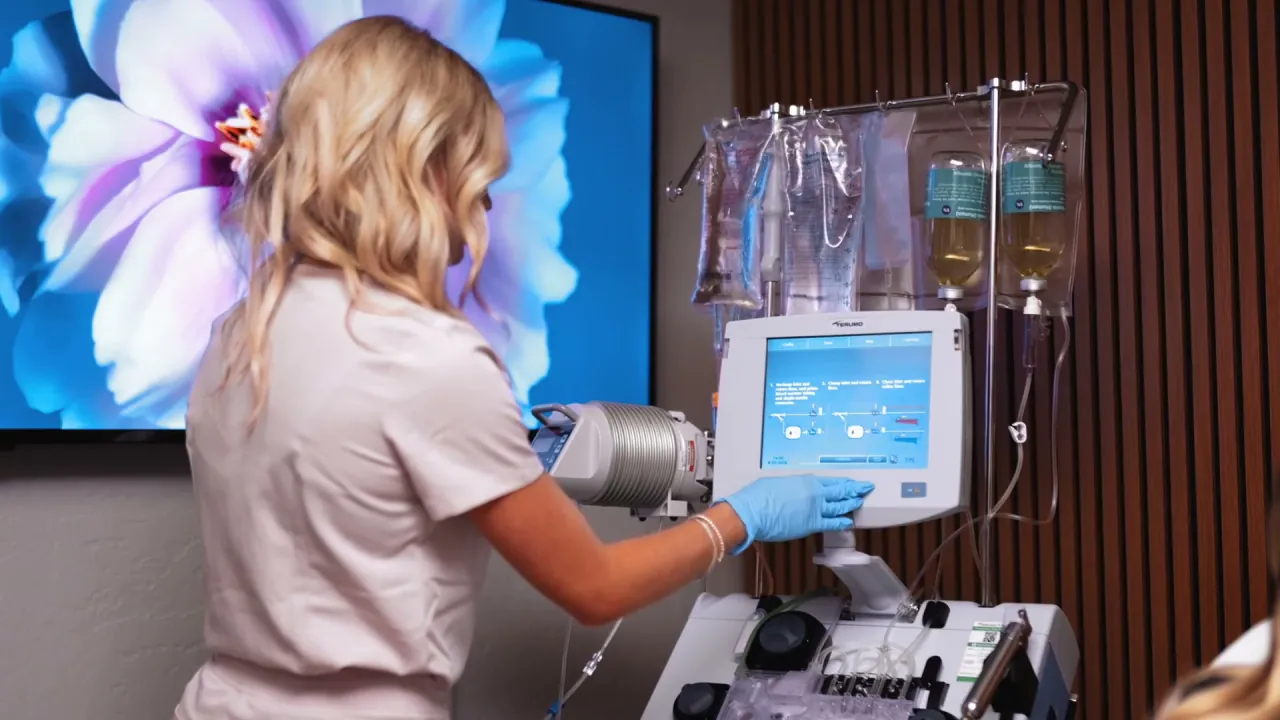
We help people with Alzheimer’s disease and their families, who often feel there is nothing more they can do, by offering a plasma exchange protocol based on the AMBAR trial, so they can explore one more option alongside regular care.
Part of Blood Rehabilitation:RemoveRestoreSupport
- 8090 N. 85th Way, Suite 100, Scottsdale, AZ 85258
- (623) 294-5577
- Monday to Friday, 9 a.m. to 5 p.m.
Want this measured, not just discussed?
The scope of the problem
An estimated 7.2 million Americans aged 65 and older are living with Alzheimer's dementia in 2025 — the first time that figure has exceeded 7 million — and Alzheimer's deaths rose 142% between 2000 and 2022 while heart disease deaths declined over the same period.¹ It is the sixth-leading cause of death among older Americans and, without new treatment advances, projected total care costs approach $1 trillion annually by 2050.¹
How it's treated today
Cholinesterase inhibitors and memantine remain the longstanding symptomatic treatments. More recently, FDA-approved anti-amyloid monoclonal antibodies (lecanemab and donanemab) target amyloid plaque directly and have shown modest slowing of cognitive decline in early Alzheimer's disease, though they carry real monitoring requirements and are not appropriate for every patient or stage of disease.
The unmet need
Available treatments modestly slow progression; none reverse it, and none are appropriate for every patient. There remains substantial unmet need for approaches that address disease mechanisms beyond amyloid alone.
Where TPE may help
At 14 months, across AMBAR’s pooled treatment groups, functional decline was 52% lower (p=0.03); the 66% cognitive difference was a trend, not statistically significant (p=0.06). The moderate subgroup (MMSE 18–21) had 61% less decline on both measures. Mild participants (MMSE 22–26) did not show a significant treatment effect on those measures. These findings do not establish a benefit for other diagnoses or people without symptoms.² AMBAR randomized 347 patients with diagnosed mild-to-moderate Alzheimer's disease. Further studies are needed. See our Brain Health Program for the study schedule and questions to discuss with your treating neurologist.
What the AMBAR trial found
AMBAR at a glance: how much less scores declined than with placebo
- 52%Daily activitiesLess decline than placebo in the combined plasma exchange groups at 14 months. Statistically significant (p = 0.03).
- 66%Memory and thinkingLess decline in the combined groups. A trend that fell just short of statistical significance (p = 0.06).
- 61%Moderate Alzheimer’sLess decline on both measures in people with moderate disease (MMSE 18 to 21).
- 71%Clinician-rated dementia scaleLess decline in the combined groups on a secondary measure (p = 0.002).
These are differences in decline, not shares of people who improved. In mild Alzheimer’s, no significant effect was seen on the two main measures.
The main trial. AMBAR (Alzheimer Management by Albumin Replacement) is the largest randomized trial of plasma exchange in Alzheimer’s disease. It enrolled 347 people with mild to moderate Alzheimer’s in Spain and the US. Participants were randomly assigned to one of three plasma exchange regimens with albumin, or to a sham (placebo) procedure. Treatment lasted about 14 months: six weekly exchanges, followed by 12 smaller monthly ones. The results were published in 2020.³
What it found. Across everyone treated, daily functioning (such as dressing and managing household tasks) declined about half as much as with the sham procedure, a difference large enough to be statistically meaningful. Memory and thinking also declined less, but that difference narrowly missed statistical significance. In people with moderate Alzheimer’s, both measures declined by less than half as much as with sham. The researchers concluded that the approach may slow decline but that more studies are needed.³
Further analyses. In additional (secondary) analyses of the same trial, people who received plasma exchange declined less on a clinician-rated dementia scale, with about 70% less decline. They also had better quality of life and verbal memory.³,⁴ Secondary results are less certain than the main results, because the trial was not designed around them.
Outside the trial. A real-world study in Argentina followed 32 people who received plasma exchange for about a year. On a standard memory-and-thinking screening test, their scores declined about 45% less than those of comparison patients taken from past records.⁵ This kind of comparison is weaker than a randomized trial, because the groups may differ in ways that have nothing to do with treatment.
How plasma exchange might work for the brain
The idea behind it. This is a working hypothesis. Albumin in the blood binds most of the amyloid-beta protein, so replacing plasma with fresh albumin may shift how amyloid-beta moves between the blood and the brain.³ Plasma exchange may also remove inflammatory proteins and supply albumin that is less oxidized.⁶ In a mouse model of Alzheimer’s disease, plasma exchange lowered amyloid plaques in the brain.⁷ Animal results often do not carry over to people.
Why that might matter for the brain. Plasma carries signaling molecules, including inflammatory messengers called cytokines, and proteins that can influence the brain. Long-lasting, low-grade inflammation is linked in observational research to memory and thinking changes. Researchers are studying whether lowering the load of circulating inflammatory factors could support a calmer environment around the brain. This is an idea under study, not a proven effect.
The “brain sink”: a working hypothesis
Lowering amyloid-beta in the blood may draw it out of the brain.
Brain
Small, soluble forms of amyloid-beta
Blood
Most amyloid-beta in blood is carried on albumin
Plasma exchange replaces plasma with albumin that contains no detectable amyloid-beta
What is still unknown. Researchers have not shown that this happens in people, and other effects of plasma exchange, such as on inflammation, may matter as much or more.
You might consider this track if you're...
- A patient or family member discussing physician-confirmed moderate Alzheimer's disease with a treating neurologist
- Seeking information about the published TPE research without assuming it applies to a different diagnosis
- Referred by a neurologist or memory-care specialist — see our Physician & Provider Referrals page
Research limits
AMBAR studied a specific diagnosed group, so its results apply to that group.
What has not been shown. AMBAR enrolled people who already had Alzheimer’s. This trial does not show that plasma exchange prevents dementia or sharpens thinking in healthy people, and we are not aware of trials that have tested this. Brain health remains an investigational area for plasma exchange. If you or a family member has a diagnosis, please involve your neurologist before considering it.
References
- 2025 Alzheimer's Disease Facts and Figures Report: Executive Summary. Alzheimer's Association; 2025.
- Boada M, et al. A randomized, controlled clinical trial of plasma exchange with albumin replacement for Alzheimer's disease: Primary results of the AMBAR Study. Alzheimers Dement. 2020.
- Boada M, López OL, Olazarán J, et al. A randomized, controlled clinical trial of plasma exchange with albumin replacement for Alzheimer’s disease: primary results of the AMBAR study. Alzheimers Dement. 2020;16(10):1412-1425. doi:10.1002/alz.12137
- Boada M, López OL, Olazarán J, et al. Neuropsychological, neuropsychiatric, and quality-of-life assessments in Alzheimer’s disease patients treated with plasma exchange with albumin replacement from the randomized AMBAR study. Alzheimers Dement. 2022;18(7):1314-1324. doi:10.1002/alz.12477
- Taragano F, Seinhart D, Epstein P, et al. A real-world study on the safety and efficacy of therapeutic plasma exchange in patients with Alzheimer’s disease. J Alzheimers Dis. 2025;108:129-141. doi:10.1177/13872877251375430
- Imbimbo BP, Ippati S, Ceravolo F, Watling M. Perspective: is therapeutic plasma exchange a viable option for treating Alzheimer’s disease? Alzheimers Dement (N Y). 2020;6(1):e12004. doi:10.1002/trc2.12004
- Ramirez S, Koerich S, Astudillo N, et al. Plasma exchange reduces Aβ levels in plasma and decreases amyloid plaques in the brain in a mouse model of Alzheimer’s disease. Int J Mol Sci. 2023;24(23):17087. doi:10.3390/ijms242317087
- Boada M, Kiprov D, Anaya F, et al. Feasibility, safety, and tolerability of two modalities of plasma exchange with albumin replacement to treat elderly patients with Alzheimer’s disease in the AMBAR study. J Clin Apher. 2023;38(1):45-54. doi:10.1002/jca.22026
This page describes general information about a specific published clinical trial and is not medical advice. TPE is not FDA-approved to treat Alzheimer's disease or any cognitive condition, and is not intended to diagnose, treat, cure, or prevent any disease. Patients with a diagnosed cognitive condition should be evaluated and treated by a qualified neurologist.
Questions worth asking any clinic, including ours.
Before you decide, ask us these. We’ll answer them plainly.
- What is the evidence for this use of TPE, and how strong is it?
- What will my Focused panel measure, what would an Expanded panel add, and how will we know what changed?
- What are the risks, and who should not have this procedure?
- What will it cost in total? (The Focused panel is included; the Expanded panel is an additional fee.)
- How will my own physician or clinician be kept informed?
Call us or send a request online, and our clinical team will answer your questions and set up a consultation.
Visit or call the clinic
Blood Rehabilitation Centers, Scottsdale, Arizona. Call us or send a request online, and our clinical team will answer your questions and set up a consultation.
Call (623) 294-5577- 8090 N. 85th Way, Suite 100, Scottsdale, AZ 85258
- Monday to Friday, 9 a.m. to 5 p.m.
What would you like to understand?
Browse all pages
- Home
- Blood Rehabilitation
- How We Prove It
- Programs
- The Vitality Cascade
- Membership
- TPE / Plasmapheresis
- TPE Fees & Packages
- How ClearCycle™ TPE Works
- The Evidence Behind TPE
- TPE Patient Experience
- eBoo
- EBO2 Fees & Packages
- How EBO2 Works
- EBO2 Patient Experience
- Safety & Standards
- Dr. David George
- Team
- For referring clinicians
- Contact Us in Scottsdale
- Frequently Asked Questions
- Privacy
- Terms & Conditions
- Cookie Policy
- Accessibility
- TPE for Biological Age
- TPE for Autoimmune & Chronic Inflammatory Conditions
- TPE for Cardiovascular Health
- TPE for Brain Health & Cognitive Function
- TPE for Environmental Exposure: Mold, Microplastics & Environmental Toxins
- TPE for Women’s Health
- Cardiovascular Health Program
- Biological Age
- Brain Health
- Autoimmune
- Environmental Exposure Program
- Women’s Health
- Performance Blood Health
- AMBAR trial summary