

TPE for Cardiovascular Health
We help adults concerned about cholesterol and inflammation by pairing plasma exchange with advanced lipid testing before and after, so they can watch their own heart numbers change.
Part of Blood Rehabilitation:RemoveRestoreSupport
- 8090 N. 85th Way, Suite 100, Scottsdale, AZ 85258
- (623) 294-5577
- Monday to Friday, 9 a.m. to 5 p.m.
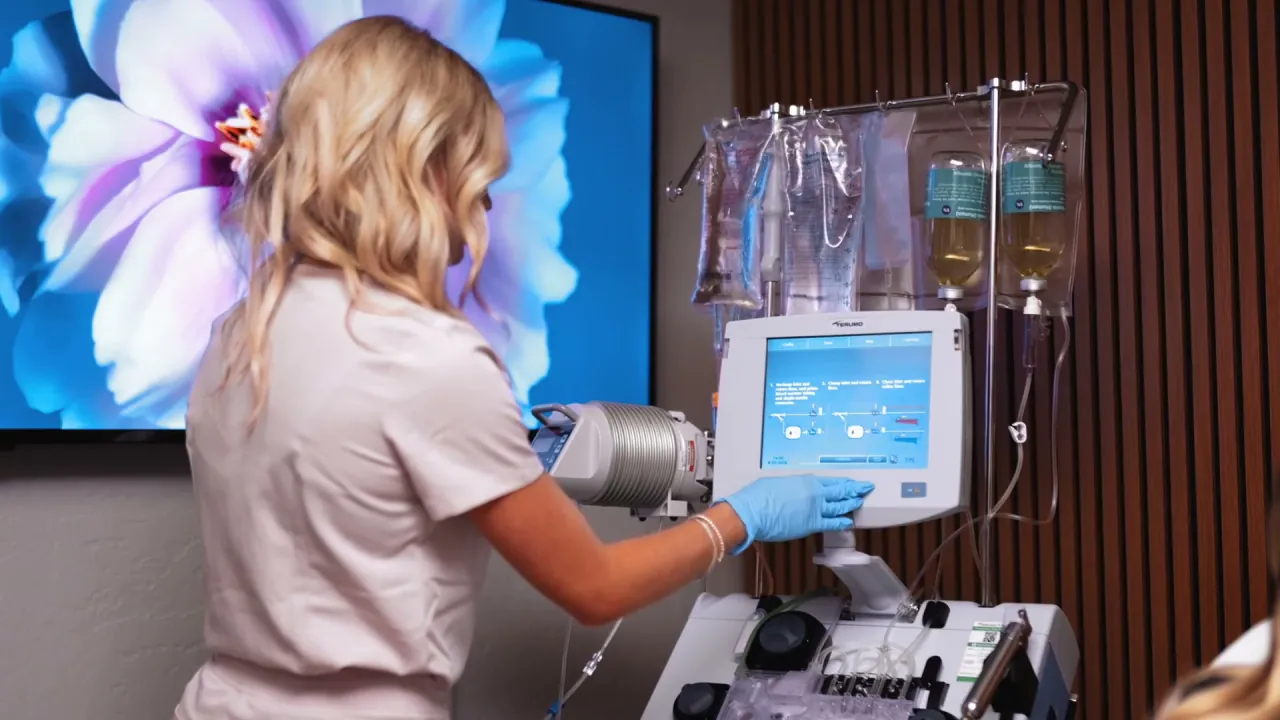
Want this measured, not just discussed?
The scope of the problem
Cardiovascular disease remains the leading cause of death in the United States. The American Heart Association's most recent statistical update reports that cardiovascular disease affects roughly half of U.S. adults and continues to account for more deaths than any other single cause nationally.¹ Elevated LDL cholesterol and chronic vascular inflammation are two of the best-established, independently modifiable contributors to that burden.
How it's treated today
Standard care is built around statins, and increasingly PCSK9 inhibitors, to lower LDL cholesterol, alongside blood pressure control, lifestyle modification, and — for patients with severe, genetically driven hypercholesterolemia who don't respond adequately to medication — a specific, FDA-cleared form of apheresis (LDL apheresis) that mechanically removes LDL particles from the blood. LDL apheresis is the clearest existing precedent for using an apheresis-based approach in cardiovascular care.
The unmet need
Lowering LDL is not the whole picture. The landmark CANTOS trial demonstrated that targeting inflammation directly — independent of LDL levels — reduced cardiovascular events, establishing "residual inflammatory risk" as a recognized gap in standard lipid-focused care.² Patients at or near their LDL targets can still carry meaningful, measurable inflammatory risk that standard therapy doesn't fully address.
Where TPE may help
TPE's plasma-volume exchange removes a calculated portion of circulating inflammatory proteins and lipid-carrying particles in a single mechanical process — conceptually adjacent to LDL apheresis, but broader in what it removes. This is an extrapolation from an established, related apheresis technique rather than a body of TPE-specific cardiovascular outcomes research.
What we measure, before and after
Many lipid experts now use ApoB as a more precise guide than LDL cholesterol.³
| Marker | What it reflects |
|---|---|
| ApoB | Count of cholesterol-carrying particles that can enter artery walls |
| LDL cholesterol (LDL-C), total cholesterol, non-HDL-C, HDL-C, triglycerides (the full lipid panel) | Standard cholesterol and lipid values, including the LDL-C that statins, ezetimibe, and PCSK9 inhibitors are prescribed to lower |
| hs-CRP | Background inflammation |
| Advanced lipid panel (particle number and size) | A finer picture of the particles |
| Homocysteine | An amino acid linked to vascular risk |
| Fibrinogen | A clotting protein that also rises with inflammation |
| Coronary artery calcium score or CT angiography (optional) | Imaging of plaque. Bring recent results if you have them. |
How a series is expected to change your numbers
What plasma carries that matters for the heart. Cholesterol travels in particles, each with one ApoB protein, so ApoB counts those particles. Inflammatory proteins such as hs-CRP and fibrinogen also circulate in plasma. When plasma is removed, some of each is removed with it.
What we expect to see, and for how long. These numbers are expected to fall after a session and then rise again as the body makes more. That is why Clearegen plans a series of sessions and re-tests with the same panel.
Expected pattern across a series: each session starts from a lower level than the one before
Illustrative sketch, not patient data. An effect on heart attack or stroke risk has not been shown.
- ApoB particlesCarry cholesterol in the blood
- Inflammatory proteinshs-CRP and fibrinogen
Level in blood across a series (illustrative). The dashed line is the starting level. No values are shown.
Starting level
Re-test
- Session 1 Dips, then slowly rises
- Session 2 Goes lower
- Session 3 Lower again
A reading taken right after a session reflects what was removed, not your new baseline.
What researchers have measured. In studies of people with established illness, a single plasma exchange lowered inflammatory and heart-strain markers such as CRP right away, and those markers were found in the plasma that was removed, which confirms that the effect is removal.⁸ Researchers advise caution when reading these markers soon after a session. In a small study without a control group, adults with metabolic syndrome had a lower CRP after four low-volume sessions.⁹ Whether any of these changes last, or lower the risk of a heart attack or stroke, has not been shown.
What the evidence shows, and what it does not
Established. ApoB is a recognized marker of cardiovascular risk. Many lipid experts now use ApoB as a more precise guide than LDL cholesterol.³
Studied in other settings. Lipoprotein apheresis, a selective cousin of plasma exchange, is used for severe inherited cholesterol disorders and for established heart disease. In large registries, people had fewer cardiovascular events after starting it than before, though these were observational studies without a control group.⁴,⁵,⁷ In severe familial hypercholesterolemia, plasma exchange has a recognized supporting role.⁶
What has not been shown. We are not aware of trials showing that plasma exchange lowers the risk of heart attack or stroke in people with elevated risk factors. This Program does not claim it does. It measures your numbers before and after, so you can see what changed.
You might consider this track if you're...
- Still carrying residual inflammatory or lipid risk despite standard therapy
- Interested in a mechanical, one-time-per-session approach to circulating risk factors alongside your existing treatment
- Already engaged in our Biological Age track and want cardiovascular risk markers specifically addressed
References
- American Heart Association Council on Epidemiology and Prevention Statistics Committee. 2025 Heart Disease and Stroke Statistics: A Report of US and Global Data From the American Heart Association. Circulation. 2025;151.
- Ridker PM, Everett BM, Thuren T, et al. Antiinflammatory Therapy with Canakinumab for Atherosclerotic Disease. N Engl J Med. 2017;377(12):1119-1131.
- Soffer DE, Marston NA, Maki KC, et al. Role of apolipoprotein B in the clinical management of cardiovascular risk in adults: an expert clinical consensus from the National Lipid Association. J Clin Lipidol. 2024;18(5):e647-e663. doi:10.1016/j.jacl.2024.08.013
- Schettler VJJ, Neumann CL, Peter C, et al. The German Lipoprotein Apheresis Registry (GLAR)—almost 5 years on. Clin Res Cardiol Suppl. 2017;12(suppl 1):44-49. doi:10.1007/s11789-017-0089-9
- Nugent AK, Gray JV, Gorby LK, Moriarty PM. Lipoprotein apheresis: first FDA indicated treatment for an inherited lipoprotein particle. J Clin Cardiol. 2020;1(1):16-21. doi:10.33696/cardiology.1.002
- Connelly-Smith L, Alquist CR, Aqui NA, et al. Guidelines on the use of therapeutic apheresis in clinical practice—evidence-based approach from the Writing Committee of the American Society for Apheresis: the ninth special issue. J Clin Apher. 2023;38(2):77-278. doi:10.1002/jca.22043
- Gianos E, Duell PB, Toth PP, et al. Lipoprotein apheresis: utility, outcomes, and implementation in clinical practice: a scientific statement from the American Heart Association. Arterioscler Thromb Vasc Biol. 2024;44(12):e304-e321. doi:10.1161/ATV.0000000000000177
- Tutarel O, Golla P, Beutel G, et al. Therapeutic plasma exchange decreases levels of routinely used cardiac and inflammatory biomarkers. PLoS One. 2012;7(6):e38573. doi:10.1371/journal.pone.0038573
- Slavic V, Antunovic T, Randjelovic D, Terzic Stanic N, Boljevic J. Therapeutic role of low-volume plasma exchange in modulating lipopolysaccharides-binding protein and inflammatory pathways in metabolic syndrome. Arch Med Sci Atheroscler Dis. 2026;11(1):17-23. doi:10.5114/amsad/216575
- Rony RMIK, Shokrani A, Malhi NK, et al. Therapeutic plasma exchange: current and emerging applications to mitigate cellular signaling in disease. Biomolecules. 2025;15(7):1000. doi:10.3390/biom15071000
- Altobelli C, Anastasio P, Cerrone A, et al. Therapeutic plasmapheresis: a revision of literature. Kidney Blood Press Res. 2023;48(1):66-78. doi:10.1159/000528556
TPE for cardiovascular risk factor support is an elective wellness service and is not a substitute for statin therapy, blood pressure management, LDL apheresis where clinically indicated, or ongoing cardiology care. It is not intended to diagnose, treat, cure, or prevent any disease.
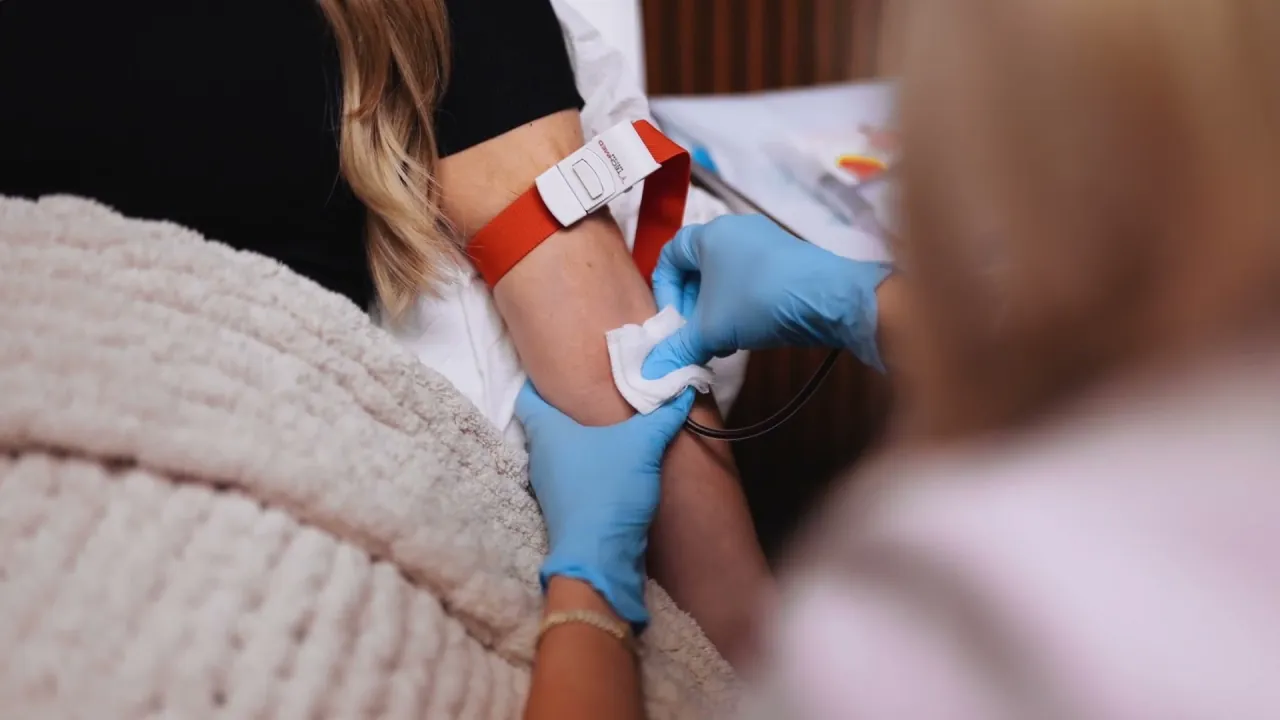
Questions worth asking any clinic, including ours.
Before you decide, ask us these. We’ll answer them plainly.
- What is the evidence for this use of TPE, and how strong is it?
- What will my Focused panel measure, what would an Expanded panel add, and how will we know what changed?
- What are the risks, and who should not have this procedure?
- What will it cost in total? (The Focused panel is included; the Expanded panel is an additional fee.)
- How will my own physician or clinician be kept informed?
Call us or send a request online, and our clinical team will answer your questions and set up a consultation.
Visit or call the clinic
Blood Rehabilitation Centers, Scottsdale, Arizona. Call us or send a request online, and our clinical team will answer your questions and set up a consultation.
Call (623) 294-5577- 8090 N. 85th Way, Suite 100, Scottsdale, AZ 85258
- Monday to Friday, 9 a.m. to 5 p.m.
What would you like to understand?
Browse all pages
- Home
- Blood Rehabilitation
- How We Prove It
- Programs
- The Vitality Cascade
- Membership
- TPE / Plasmapheresis
- TPE Fees & Packages
- How ClearCycle™ TPE Works
- The Evidence Behind TPE
- TPE Patient Experience
- eBoo
- EBO2 Fees & Packages
- How EBO2 Works
- EBO2 Patient Experience
- Safety & Standards
- Dr. David George
- Team
- For referring clinicians
- Contact Us in Scottsdale
- Frequently Asked Questions
- Privacy
- Terms & Conditions
- Cookie Policy
- Accessibility
- TPE for Biological Age
- TPE for Autoimmune & Chronic Inflammatory Conditions
- TPE for Cardiovascular Health
- TPE for Brain Health & Cognitive Function
- TPE for Environmental Exposure: Mold, Microplastics & Environmental Toxins
- TPE for Women’s Health
- Cardiovascular Health Program
- Biological Age
- Brain Health
- Autoimmune
- Environmental Exposure Program
- Women’s Health
- Performance Blood Health
- AMBAR trial summary