

TPE for Environmental Exposure: Mold, Microplastics & Environmental Toxins
We help people worried about microplastics, PFAS, mold and other exposures by measuring their exposure markers and offering plasma exchange as an emerging option, so they can go from worrying to knowing their levels and doing something about them.
Part of Blood Rehabilitation:RemoveRestoreSupport
- 8090 N. 85th Way, Suite 100, Scottsdale, AZ 85258
- (623) 294-5577
- Monday to Friday, 9 a.m. to 5 p.m.
Want this measured, not just discussed?
The scope of the problem
Exposure to environmental contaminants is close to universal, even where clinical significance is still being established. Microplastic particles have now been directly measured and quantified in human blood samples, present in the majority of a small study cohort tested.¹ CDC guidance following major floods and hurricanes has documented the health effects associated with mold growth in water-damaged buildings, a genuinely common indoor exposure.²
How it's addressed today
There is no FDA-approved medical treatment for "toxin burden" as a general category — the standard approach is exposure reduction (remediation, filtration, dietary and product choices) plus symptom-directed care for whatever specific condition, if any, a patient has been diagnosed with.
The unmet need
Exposure is well documented; a validated clinical pathway connecting that exposure, an individual's symptom burden, and a proven treatment is not. Patients frequently arrive highly motivated by mold, microplastic, or pesticide exposure and looking for something concrete to do about it, without an established medical consensus pointing them anywhere specific.
Where TPE may help
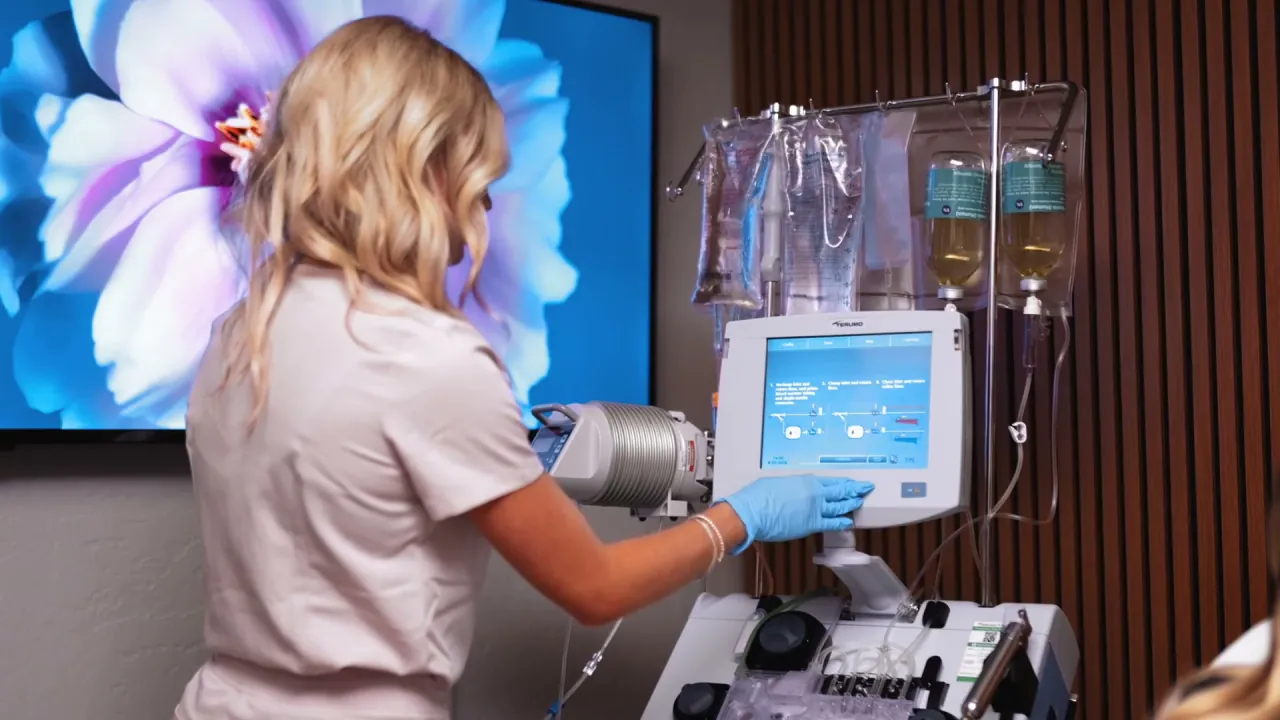
TPE mechanically removes a calculated volume of plasma — the fraction of blood in which some circulating contaminants, including some microplastic particles and lipophilic compounds, are carried — and replaces it with fresh albumin. This is a plausible mechanism, not a demonstrated clinical outcome: to date there is no published clinical trial establishing that TPE reduces measured toxin burden or improves toxin-related symptoms in humans.
You might consider this track if you're...
- Highly motivated by a specific, identified exposure (e.g. a known water-damaged living or work environment) and already pursuing remediation
- Interested in TPE as one part of a broader environmental-health protocol you're managing with a physician, not a standalone fix
- Approaching this from a biological-age/general-wellness interest rather than an acute, diagnosed illness
References
- Leslie HA, van Velzen MJM, Brandsma SH, Vethaak AD, Garcia-Vallejo JJ, Lamoree MH. Discovery and quantification of plastic particle pollution in human blood. Environ Int. 2022;163:107199.
- Centers for Disease Control and Prevention. Mold Prevention Strategies and Possible Health Effects in the Aftermath of Hurricanes and Major Floods. MMWR Recomm Rep. 2006;55(RR-8):1-27.
TPE is not FDA-approved or clinically proven to reduce microplastic, mold, or pesticide-related toxin burden, and is not intended to diagnose, treat, cure, or prevent any disease.
Questions worth asking any clinic, including ours.
Before you decide, ask us these. We’ll answer them plainly.
- What is the evidence for this use of TPE, and how strong is it?
- What will my Focused panel measure, what would an Expanded panel add, and how will we know what changed?
- What are the risks, and who should not have this procedure?
- What will it cost in total? (The Focused panel is included; the Expanded panel is an additional fee.)
- How will my own physician or clinician be kept informed?
Call us or send a request online, and our clinical team will answer your questions and set up a consultation.
Visit or call the clinic
Blood Rehabilitation Centers, Scottsdale, Arizona. Call us or send a request online, and our clinical team will answer your questions and set up a consultation.
Call (623) 294-5577- 8090 N. 85th Way, Suite 100, Scottsdale, AZ 85258
- Monday to Friday, 9 a.m. to 5 p.m.
What would you like to understand?
Browse all pages
- Home
- Blood Rehabilitation
- How We Prove It
- Programs
- The Vitality Cascade
- Membership
- TPE / Plasmapheresis
- TPE Fees & Packages
- How ClearCycle™ TPE Works
- The Evidence Behind TPE
- TPE Patient Experience
- eBoo
- EBO2 Fees & Packages
- How EBO2 Works
- EBO2 Patient Experience
- Safety & Standards
- Dr. David George
- Team
- For referring clinicians
- Contact Us in Scottsdale
- Frequently Asked Questions
- Privacy
- Terms & Conditions
- Cookie Policy
- Accessibility
- TPE for Biological Age
- TPE for Autoimmune & Chronic Inflammatory Conditions
- TPE for Cardiovascular Health
- TPE for Brain Health & Cognitive Function
- TPE for Environmental Exposure: Mold, Microplastics & Environmental Toxins
- TPE for Women’s Health
- Cardiovascular Health Program
- Biological Age
- Brain Health
- Autoimmune
- Environmental Exposure Program
- Women’s Health
- Performance Blood Health
- AMBAR trial summary